Rising temperatures and more frequent heatwaves are making effective heat protection in the workplace increasingly important. Many companies and users are therefore asking themselves: which cooling clothing is the right choice? Whether it’s a cooling vest with ice packs, PCM cooling, a ventilation system or modern evaporative cooling – the available cooling technologies differ significantly in terms of cooling performance, comfort, mobility and cost-effectiveness. Anyone wishing to choose the right solution should therefore consider not only the maximum cooling effect, but also practical use in day-to-day working life.
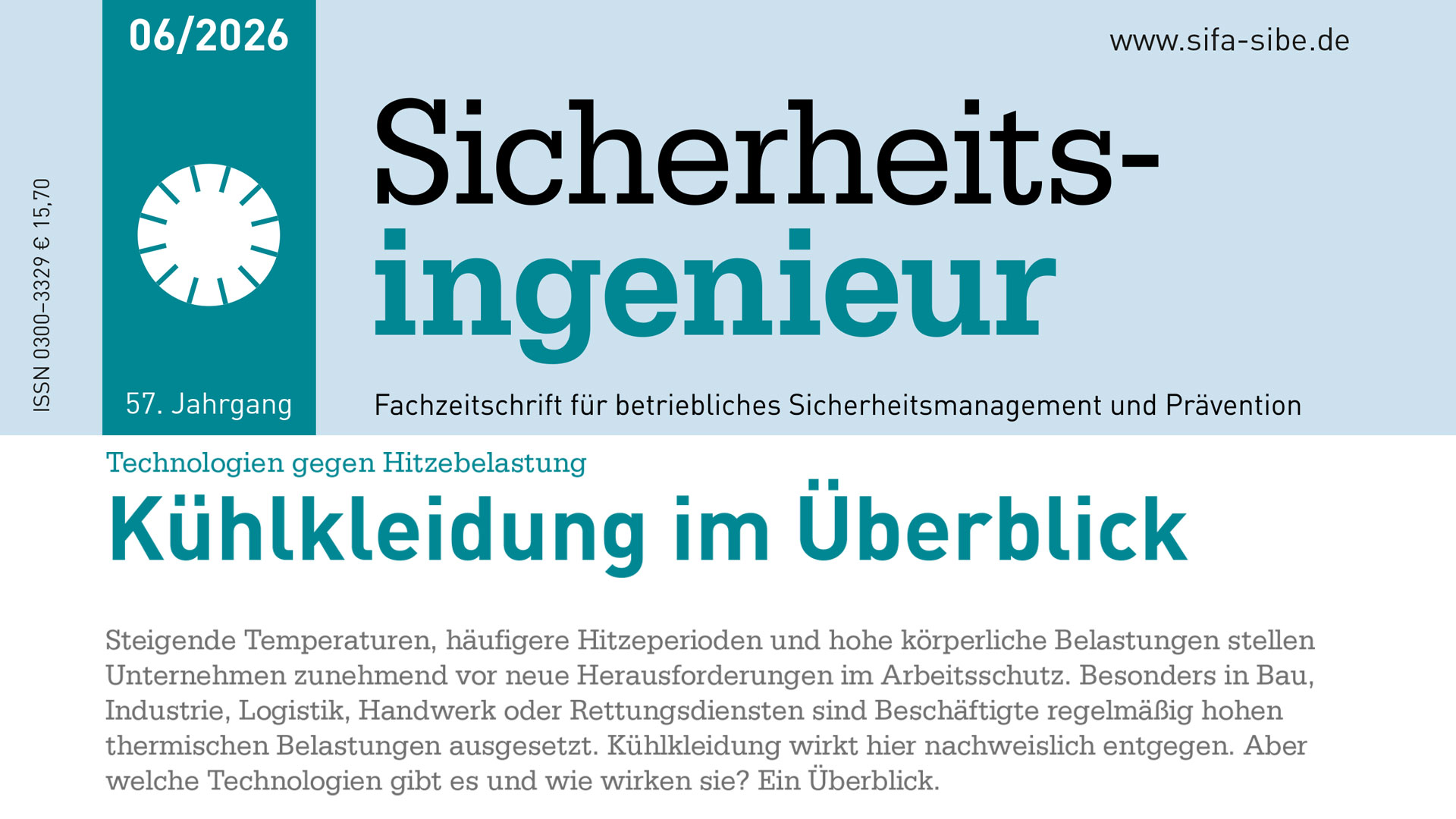
The latest article by Gabriele Renner, Managing Director of Pervormance international GmbH, published in the trade journal *Sicherheitsingenieur*, compares the key cooling technologies and highlights what companies should look out for when selecting cooling clothing.
Comparison of cooling technologies
Traditional cooling vests with ice or gel packs initially provide intense cooling, but lose their effectiveness as the cooling packs thaw. Furthermore, they are comparatively heavy and require a functioning cold chain. PCM (Phase Change Materials) cooling vests operate at a constant temperature and are particularly suitable for defined periods of use; however, they also require regeneration and have a limited service life. Active cooling systems with fans or water-carrying hoses may be useful under certain conditions, but they require a power supply, technical infrastructure and, in many cases, greater maintenance.
3D cooling technology proves its worth in day-to-day work
Modern 3D cooling textiles with a hybrid system have proven particularly effective in practice. They utilise controlled evaporative cooling, operate in basic mode without an external energy source or complex cooling infrastructure, and can be expanded with additional cooling levels as required. As a result, they combine a high degree of freedom of movement, minimal organisational effort and flexible adaptation to different operating conditions – from day-to-day work right through to extreme heat stress.
Conclusion: Real-world applicability is crucial
The conclusion of the article: When it comes to heat protection in the workplace, it is not the maximum cooling capacity under laboratory conditions that is decisive, but rather its practical suitability in real-world working conditions. Modern 3D cooling technologies such as E.COOLINE offer a particularly well-balanced combination of cooling performance, comfort and flexibility. They enable effective heat protection without the need for complex infrastructure and thus represent a forward-looking solution for businesses and employees.
Click here for the technical article ‘An overview of cooling clothing’